Cassini has honestly been one of the most amazing long-term deep space missions humanity has ever launched. It discovered lakes, rivers, and waves of liquid hydrocarbons on Titan, and even landed a probe there, setting the record for most distant body explored by humanity in the process.
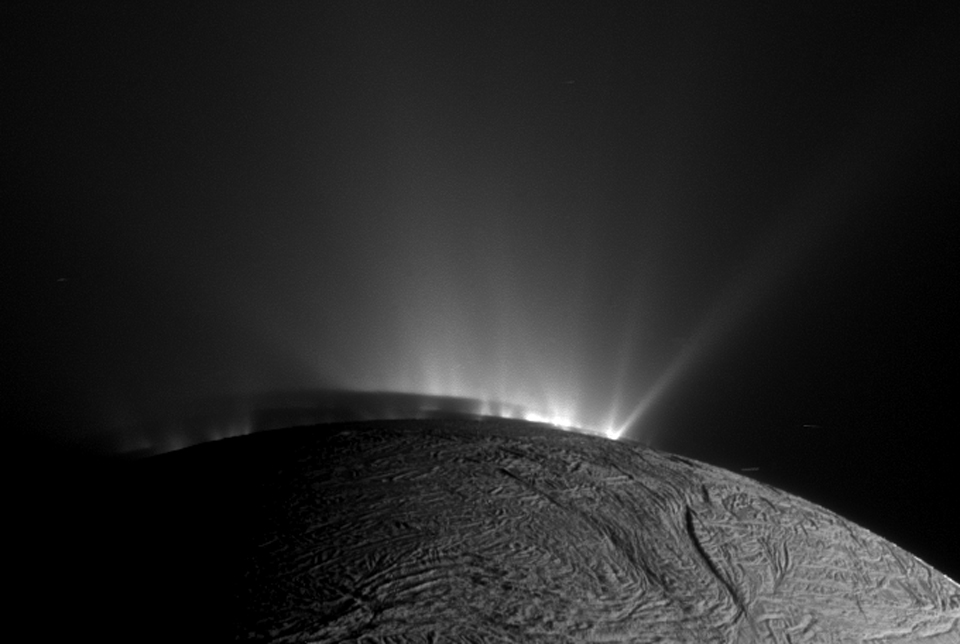
It brought us stunning views of the water-ice geysers of Enceladus, even sampling the particles that were ejected into space, revealing that the tiny world is hiding a vast sub-surface ocean.
It also took cataloged the dozens of smaller moons in the Saturn system, including Iapetus, a moon with both amazing coloration and a bizarre equatorial mountain range.
The mission team also recently released one of my favorite images from Cassini, of on of Saturn’s many shepherd moons. This one is Daphnis, which orbits in the Keeler Gap in Saturn’s rings. The waves trailing behind it are caused by Daphnis’s weak gravity, and help regulate the structure of the rings.
All of that isn’t to mention the loads of planetary science Cassini performed on Saturn itself. The Cassini mission discovered bizarre hexagonal storm that spins around Saturn’s north pole.
It also discovered a number of previously unknown ring systems, and in the process brought us one of the most awe-inspiring images of the mission. Believe it or not, Earth is in this picture. If you zoom in on where the rings intersect with Saturn on the bottom right, there’s a bright blue speck. That’s us.
Sadly, Cassini is reaching the end of its mission lifetime. It’s running low on maneuvering fuel, and soon it won’t be able to adjust its course anymore. In order to prevent it contaminating any of the moons in an accidental crash, the spacecraft will be taking a final low pass, plunging all the way down into Saturn’s clouds, destroying itself in the process. The mission launched in 1997, and has spent 12 and a half years in orbit around Saturn. It’s final dive will take place in September. Best of luck to Cassini and the Cassini-Huygens team in these final months!


 theclumsiestninja